How African businesses pay suppliers in China is a common question for importers across the continent.
From electronics and machinery to fashion and consumer goods, many African companies depend on Chinese manufacturers for their supply chains.
However, sending payments to suppliers in China from Africa can be complicated due to slow bank transfers, high international fees, and multiple currency conversions.
In this guide, we explain how African businesses pay suppliers in China, the common payment methods used in global trade, and a faster approach using modern payment infrastructure, such as our platform, ZendWallet, through Zend Business.
Why African Businesses Import From China
China remains the world’s largest manufacturing hub and a major supplier for businesses globally.
Platforms like Alibaba Group connect African buyers with factories producing a wide range of products, including electronics, machinery, fashion items, and household goods.
Businesses import from China because of:
- Competitive manufacturing costs
- High production capacity
- Access to large product varieties
- Reliable supplier networks
However, once the purchase agreement is finalized, businesses must determine the most reliable way to pay suppliers in China from Africa.
Common Ways African Businesses Pay Suppliers in China
International Bank Transfers (SWIFT)
The most traditional payment method is an international bank transfer via the Society for Worldwide Interbank Financial Telecommunication (SWIFT) global banking network.
While widely used, SWIFT transfers often present several challenges:
- Transfers may take 3–7 business days
- Multiple intermediary banks may deduct fees
- Exchange rate margins increase payment costs
- Limited transparency during payment processing
These delays can slow down shipments and affect supplier relationships.
Letters of Credit
Large corporations sometimes use letters of credit issued by banks to guarantee payment upon fulfilment of shipment requirements.
However, this method involves:
- Complex documentation
- High banking fees
- Longer approval timelines
Small and medium-sized businesses often find this option too complex.
Third-Party Payment Platforms
Some businesses use fintech payment platforms like Zendwallet to send international transfers.
Although these services may reduce friction compared to traditional banking systems, many still rely on bank settlement infrastructure, which means delays and fees may still occur.
Currency Conversion Challenges in Global Trade
When African businesses send money to suppliers in China, the payment process often involves multiple currency conversions.
For example:
- Local African currency converts to USD
- USD converts to Chinese Yuan (CNY)
Each conversion adds processing time and exchange fees, reducing profit margins for importers.
A Modern Approach: Stablecoin-Powered Payments
New payment infrastructure is helping businesses move money across borders faster.
Stablecoins such as Tether, USDT, and USD Coin (USDC) allow businesses to transfer value internationally with fewer intermediaries and faster settlement.
This model powers ZendFX, the cross-border payment engine behind Zend Business, developed by ZendWallet.
How African Businesses Pay Chinese Suppliers Using Zend Business
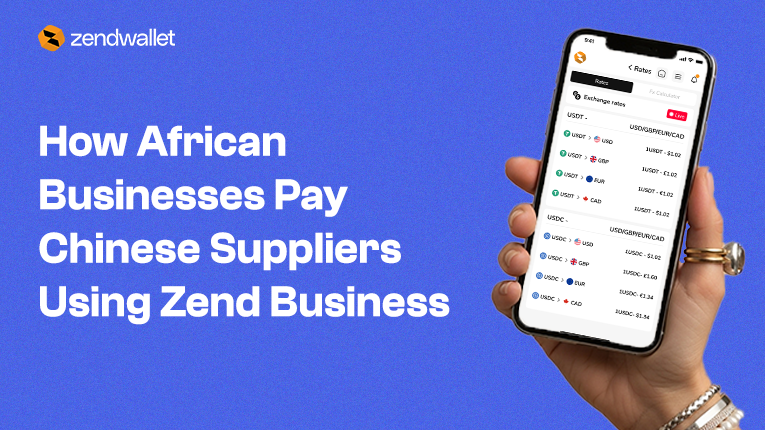
How African businesses pay suppliers in China, Zend Business enables African companies to send international payments efficiently using stablecoin infrastructure.
Through ZendFX, businesses can send payments in major global currencies including:
- USD
- EUR
- GBP
- CAD
Payments can reach suppliers across 140+ countries, including China, Hong Kong, Vietnam, and the United States.
Step-by-Step: Pay Suppliers in China Using Zend Business
1. Create Your Business Account
Visit zendwallet.com, sign up for a Zend Business account, and complete the KYB (Know Your Business) verification process.
2. Submit Business Details
Provide the required company documents and verify your business.
You can also:
- Add company directors
- Assign team members
- Set specific roles and permissions for financial operations
3. Access ZendFX
Once your account is verified, log in to your Zend Business dashboard and navigate to the ZendFX section to begin a payment.
4. Payment Initiation Process
Follow these steps to send payment to your supplier.
Select Currency
Choose the foreign currency you want to send:
- USD
- EUR
- GBP
- CAD
Input Beneficiary and Bank Details
Enter the recipient’s payment information, including:
- Beneficiary name
- Email address
- Phone number
- Bank account number
- SWIFT code
- Bank address
Upload Invoice
Attach an invoice for verification.
Supported formats include:
- JPEG
- PNG
Maximum file size: 2MB
Choose Crypto Funding Option
Select the crypto asset that will fund the transaction from your wallet balance.
Supported stablecoins include:
Receive Confirmation and Track Status
After submitting the transaction:
- You will receive payment status updates
- Status may show successful, failed, or action required
- You can download MT103 receipts and payment confirmations
This provides full transparency for your international payments.
ZendFX Payment Terms
ZendFX supports business transactions of various sizes.
Minimum Payment Amount:
$1,000
Maximum Payment Amount:
$1,000,000 per transaction
Processing Time:
24 to 72 business hours
These limits make the platform suitable for supplier payments, bulk imports, and large trade transactions.
Why African Businesses Use Zend Business for Supplier Payments
How African businesses pay suppliers in China ? Using ZendWallet offers several advantages for companies managing international payments.
Faster Cross-Border Transfers
Payments typically settle within 24–72 hours, significantly faster than many traditional bank transfers.
Real-Time Payment Tracking
Businesses can track transactions from initiation to completion.
Transparent Documentation
Payment receipts and MT103 documents are available for compliance and accounting purposes.
Team Payment Management
Companies can add team members and manage financial operations through a centralized dashboard.
Why Payment Speed is Important in Global Trade
Fast payments improve supplier relationships.
When suppliers receive funds on time:
- Orders are processed faster
- Shipping timelines improve
- Supply chains operate smoothly
Reliable payment infrastructure helps businesses maintain strong partnerships with overseas suppliers.
Conclusion
Understanding how African businesses pay suppliers in China is essential for companies involved in international trade. Traditional bank transfers are still widely used, but they often involve delays, high fees, and multiple currency conversions.
Our platform, Zend Business, powered by ZendFX, offers a modern approach to cross-border payments. By using stablecoins such as USDT and USDC, businesses can move money globally more quickly, transparently, and efficiently.
As international trade continues to grow, payment infrastructure like ZendWallet helps African businesses manage global supplier payments more confidently and efficiently.
Top Read: How to Use ZendFx for Payments on Your ZendWallet Account