Bitcoin remains one of the most widely recognized digital assets in global finance, influencing payments, investments, trading, remittance, and cross-border transactions.
A Bitcoin address is one of the most important parts of every Bitcoin transaction. It serves as the destination where Bitcoin is sent and received on the blockchain network.
Sending Bitcoin to a friend, receiving payment from an international client, or moving funds between wallets all depend on the Bitcoin address to direct the transaction correctly.
For many beginners, Bitcoin addresses can appear confusing because of long combinations of letters and numbers. Once the structure and purpose become clear, using Bitcoin becomes much easier to understand and manage.
On our platform, ZendWallet, users interact with Bitcoin wallet addresses daily for payments, transfers, and digital asset management.
This guide explains how Bitcoin addresses work, the different address types, how to send and receive Bitcoin on ZendWallet, and common mistakes to avoid.
What Is a Bitcoin Address?
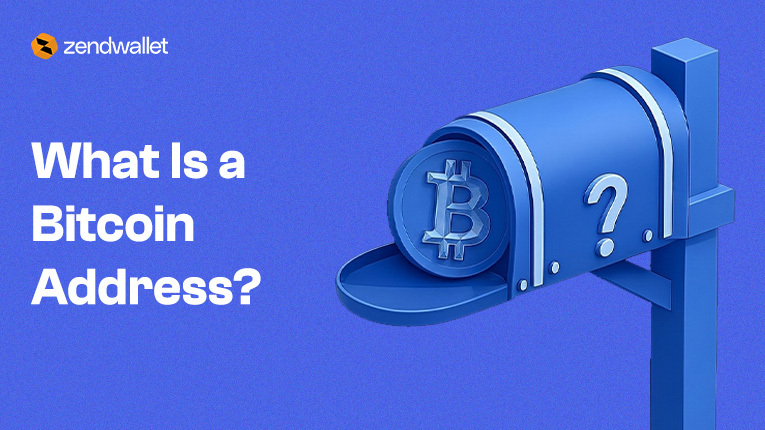
A Bitcoin address is a unique string of letters and numbers that serves as the receiving destination for Bitcoin transactions.
You can think of it as:
- A digital account number for Bitcoin
- A destination where BTC is delivered
- The blockchain version of a bank account number
Whenever someone wants to send you Bitcoin, they need your Bitcoin address.
A Bitcoin address usually looks like this:
bc1qxy2kgdygjrsqtzq2n0yrf2493p83kkfjhx0wlh
Or this:
1BgXRx8YMGKU7fc8RfTPQ2uL2ivC9cMmGj
At first glance, these addresses may look complicated, but they all serve one simple purpose:
Receiving Bitcoin on the blockchain network.
Every Bitcoin transaction recorded on the blockchain includes:
A sender
A recipient address
A transaction amount
Blockchain confirmation details
When BTC is sent, the blockchain verifies the transaction and records it permanently on the network.
Unlike traditional banking systems, Bitcoin transactions do not require:
Bank branches
Account officers
SWIFT systems
Banking hours
Instead, transactions happen directly between wallet addresses through blockchain technology.
Related topic: Ethereum Contract Address: What It Is and How to Find It
Why Bitcoin Uses Addresses Instead of Names
One of the first questions many people ask is:
“Why doesn’t Bitcoin simply use names like bank accounts?”
The answer lies in how blockchain technology works.
Bitcoin operates on a decentralized network. This means there is no central authority controlling transactions. Instead of using personal names, the network identifies wallets through cryptographic addresses.
This system helps:
- Maintain security
- Improve privacy
- Support global transactions
- Prevent unauthorized access
For example, if a business owner in Ghana wants to receive a Bitcoin payment from a client in Canada, the sender only needs the wallet address.
The transaction can happen directly on the blockchain without:
- Currency conversion delays
- Traditional wire transfer processes
- Banking restrictions
This is one of the reasons Bitcoin has become increasingly important in global digital payments and cross-border transactions.
Top Topic: How Blockchain Technology Works: A Step-by-Step Guide
How Bitcoin Addresses Are Created
Bitcoin addresses are generated through cryptographic systems connected to your wallet.
To understand this properly, it helps to break the process into three important parts:
- Private Keys
- Public Keys
- Bitcoin Addresses
Understanding Private Keys
A private key is the most important security component in your Bitcoin wallet.
It is a secret cryptographic code generated by the wallet software that gives you control over your Bitcoin.
Whoever controls the private key controls the funds connected to the wallet.
Think of it like:
- Your ATM PIN
- Your online banking password
- The key to your safe
If another person gains access to your private key, they can access your Bitcoin.
This is why private keys should:
- Never be shared publicly
- Never be sent to strangers
- Always be protected securely
On our platform ZendWallet, wallet systems are designed to help users manage digital assets securely while interacting with blockchain transactions.
Understanding Public Keys
The public key is generated from the private key through a mathematical process.
Unlike the private key, the public key can be shared safely.
Its primary role is to help generate your Bitcoin address and verify transactions on the blockchain.
You can think of it as a middle layer between:
- Your private key
- Your wallet address
How the Bitcoin Address Is Generated
The Bitcoin address itself is created from the public key through several cryptographic hashing processes.
This process helps:
- Protect the wallet owner
- Keep the private key secure
- Generate a unique transaction destination
The result is a wallet address that users can safely share publicly for receiving Bitcoin payments.
This system is one of the reasons Bitcoin transactions are secure even though addresses are publicly visible on the blockchain.
Example of How Bitcoin Addresses Work
Let’s look at a practical example.
Imagine a freelance designer in Ghana named Daniel who works with international clients.
One of his clients in the UK wants to pay him in Bitcoin.
Here’s how the process works:
Step 1
Daniel logs into his ZendWallet account.
Step 2
He opens his Bitcoin wallet and selects “Receive.”
Step 3
Our platform ZendWallet generates his Bitcoin address.
Example:
bc1qxy2kgdygjrsqtzq2n0yrf2493p83kkfjhx0wlh
Step 4
Daniel sends the address to his UK client.
Step 5
The client enters the address into their crypto wallet and sends BTC.
Step 6
The Bitcoin blockchain validates the transaction.
Step 7
After confirmation, Daniel receives the Bitcoin directly into his wallet.
The transaction happens digitally across borders without requiring:
- A bank transfer
- Currency exchange processing
- International banking approval
This is one of the reasons Bitcoin has become popular for global transactions.
Types of Bitcoin Addresses
There are several types of Bitcoin addresses used on the Bitcoin network today. While they all perform the same basic function, they differ in structure, efficiency, transaction fees, and compatibility.
Understanding the different address types can help users make better decisions when sending and receiving Bitcoin.
1. Legacy Addresses (P2PKH)
Legacy addresses are the oldest Bitcoin address format.
They usually begin with the number “1”.
Example:
1BgXRx8YMGKU7fc8RfTPQ2uL2ivC9cMmGj
These addresses were widely used during Bitcoin’s early years and remain compatible with most wallets and exchanges today.
However, legacy addresses generally:
- Require larger transaction sizes
- Use more blockchain space
- Often results in higher network fees
Some older platforms still rely on these addresses because of their broad compatibility.
2. P2SH Addresses
P2SH stands for Pay-to-Script-Hash.
These addresses begin with the number “3”.
Example:
3G3CxtfN4rg4ShVzVAUsM3AtGbnbs6v26S
P2SH addresses were introduced to support more advanced Bitcoin transaction structures.
They are commonly used for:
- Multi-signature wallets
- Shared wallet approvals
- More complex payment conditions
For example, a business may use a multi-signature wallet where:
- One manager approves payments
- Another team member verifies transactions
- Both approvals are required before BTC can move
This helps improve transaction security for organizations.
3. SegWit Addresses (Bech32)
SegWit addresses are newer Bitcoin address formats that begin with “bc1”.
Example:
bc1qsfc2g86agexaht5eh8yfp3xs9q65nhnz85dq8u
SegWit stands for Segregated Witness.
This upgrade was introduced to improve:
- Transaction efficiency
- Blockchain scalability
- Lower network fees
Benefits of SegWit addresses include:
- Smaller transaction sizes
- Faster processing
- Reduced transaction costs
Most modern wallets now prefer SegWit because of its efficiency.
4. Taproot Addresses
Taproot addresses begin with “bc1p”.
This is one of Bitcoin’s newest upgrades.
Taproot improves:
- Privacy
- Scalability
- Smart transaction flexibility
It also allows more complex Bitcoin transactions to appear simpler on the blockchain, helping improve efficiency and transaction confidentiality.
How to Receive Bitcoin on ZendWallet
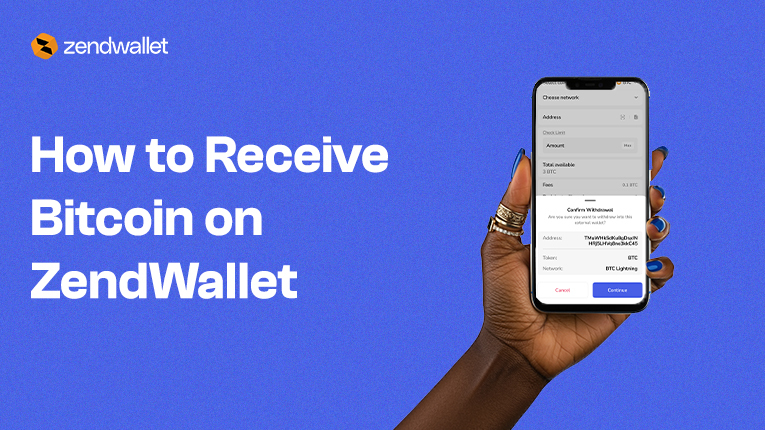
Receiving Bitcoin on our platform, ZendWallet is designed to be simple and accessible for users.
Step 1: Log in to Your Account
Access your ZendWallet dashboard securely.
Step 2: Open Your Bitcoin Wallet
Navigate to the Bitcoin wallet section within your account.
Step 3: Select “Receive”
Once selected, our platform ZendWallet automatically generates:
- A Bitcoin address
- A QR code linked to your wallet
Step 4: Share Your Address
You can:
- Copy the address manually
- Send it through messaging apps
- Share the QR code directly
Many users prefer QR codes because they reduce the risk of typing errors.
Step 5: Wait for Blockchain Confirmation
Once the sender initiates the transaction:
- The Bitcoin network validates it
- The blockchain records it
- Your wallet balance updates after confirmation
Transaction confirmation times may vary depending on blockchain traffic and network fees.
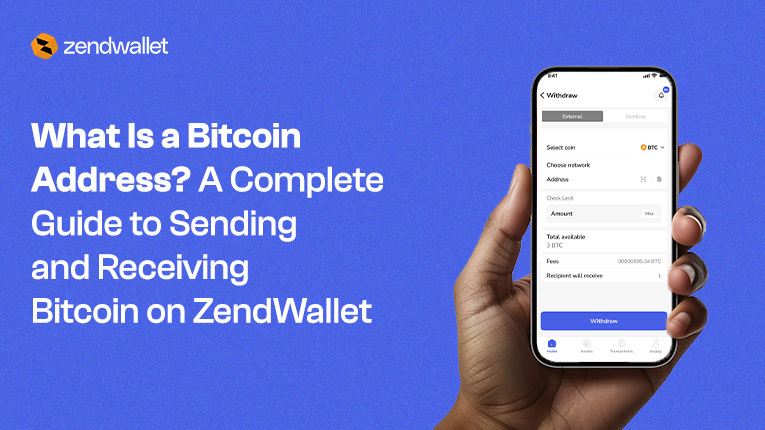
How to Send Bitcoin to a Bitcoin Address on ZendWallet
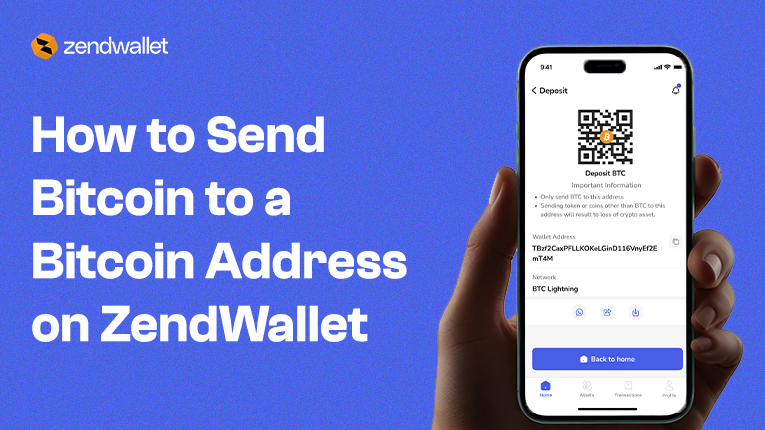
Sending Bitcoin works in a similar way but requires additional caution because blockchain transactions are permanent.
Step 1: Open Your ZendWallet Dashboard
Log in to your account and access your Bitcoin wallet.
Step 2: Click “Send”
This opens the Bitcoin transfer interface.
Step 3: Enter the Recipient’s Bitcoin Address
You can:
- Paste the wallet address manually
- Scan a QR code
Always verify the address carefully before continuing.
Because Bitcoin transactions cannot be reversed, sending funds to the wrong address may result in permanent loss.
Step 4: Enter the Amount of BTC
Input the amount of Bitcoin you want to send.
On our platform ZendWallet, users can review:
- Available balance
- Recipient address
- Blockchain network fee
- Final transaction amount
before confirming the payment.
Step 5: Confirm the Transaction
Once confirmed:
- The transaction is broadcast to the blockchain
- Bitcoin miners or validators process it
- The recipient receives the BTC after confirmation
Why Blockchain Confirmations is Important
Every Bitcoin transaction must be confirmed by the blockchain network.
Confirmations help:
- Verify the transaction
- Prevent double-spending
- Secure the blockchain ledger
The more confirmations a transaction receives, the more secure and finalized it becomes.
During busy network periods, transactions may take longer to confirm depending on:
- Blockchain traffic
- Transaction fee levels
- Network activity
Common Mistakes People Make With Bitcoin Addresses
Many beginner mistakes happen because users rush transactions.
Here are some of the most common issues.
Sending Bitcoin to the Wrong Address
Bitcoin transactions are permanent.
If funds are sent to the wrong wallet address, recovery may be impossible.
Always verify:
- Every character
- Wallet compatibility
- Blockchain network
before sending BTC.
Copying Wallet Addresses Incorrectly
Wallet addresses are long and sensitive to errors.
One incorrect character can change the destination entirely.
This is why QR code scanning is widely recommended.
Using Unsupported Networks
Some wallets only support specific blockchain networks.
Sending BTC through the wrong network may cause transaction complications.
Always verify network compatibility before transferring funds.
Bitcoin Addresses and Cross-Border Payments
Bitcoin addresses now play a growing role in global financial movement and international payments.
Businesses increasingly use digital assets for:
International settlements
Supplier transactions
Remittance
Global transfers
At ZendWallet, users interact with blockchain payment infrastructure daily through crypto transactions and cross-border payment systems.
Beyond Bitcoin transfers, Zend FX enables businesses to fund international payments using USDT and USDC while settling in:
USD
GBP
EUR
CAD
This supports global financial movement through blockchain-connected payment systems.
Frequently Asked Questions About Bitcoin Addresses
How Do I Get My Bitcoin Address?
You can get your Bitcoin address directly from your crypto wallet.
On our platform ZendWallet, the process is simple:
- Log into your account
- Open your Bitcoin wallet
- Click “Receive”
- Your Bitcoin address and QR code will appear automatically
You can then copy the address and share it with anyone sending you Bitcoin.
For example, if a customer wants to pay you in BTC for a service, you simply send them your Bitcoin address.
Once they complete the transaction and the blockchain confirms it, the Bitcoin appears in your wallet balance.
How Does a Bitcoin Address Work?
A Bitcoin address works as the destination point for Bitcoin transactions on the blockchain.
When someone sends BTC:
Their wallet broadcasts the transaction to the Bitcoin network
The blockchain verifies the transaction
The BTC is delivered to the recipient’s Bitcoin address
The recipient gains access to the funds through their wallet
The address itself is generated from cryptographic systems connected to your wallet’s private and public keys.
Although the address is public and safe to share, the private key connected to it should always remain protected.
How Much Is $100 in a Bitcoin Wallet?
The amount of Bitcoin you receive for $100 depends entirely on the current Bitcoin market price.
Bitcoin prices change constantly based on:
Market demand
Trading activity
Global economic conditions
Investor sentiment
For example:
If 1 BTC is worth $100,000, then $100 would equal 0.001 BTC
If Bitcoin rises or falls in price, the BTC amount changes accordingly
On our platform, ZendWallet, users can monitor crypto prices and wallet balances in real time before making transactions.
This helps users understand how much BTC they are buying, sending, or receiving based on live market conditions.
Conclusion.
Bitcoin addresses are one of the foundational parts of the Bitcoin network.
Although they may initially appear complex, their role is actually very simple:
They act as the destination where Bitcoin is sent and received.
Understanding how Bitcoin addresses work helps users:
Send BTC safely
Receive international payments
Avoid transaction errors
Interact with blockchain systems properly
On our platform, ZendWallet, users can securely manage Bitcoin transactions while accessing a broader blockchain-powered payment infrastructure connected to international financial activity.
As Bitcoin adoption continues to expand globally, understanding wallet addresses is becoming increasingly important for individuals and businesses participating in digital finance.
Top Read: BNB Contract Address: What Is It and Is it the same as the BNB Smart Chain (BSC) Contract Address?