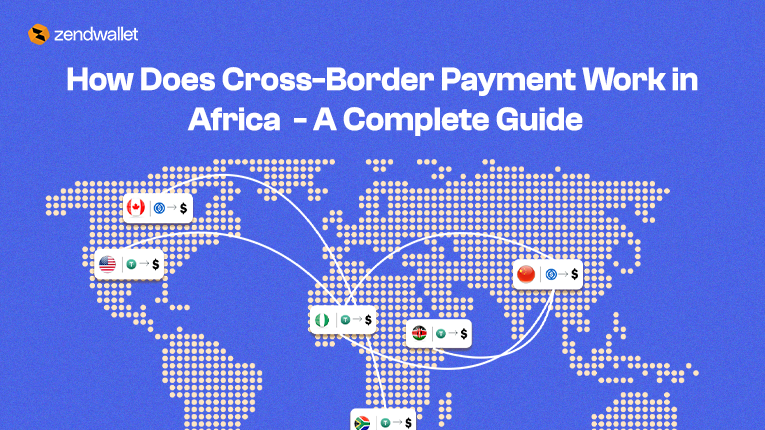
How Does Cross-Border Payment Work in Africa, For businesses operating across African markets, cross-border payments are at the centre of every growth decision. How cross-border payment work in Africa is now a strategic imperative, rather than just a back-office task. This is critical for various activities, including revenue collection from international clients, paying suppliers in other countries, and expanding into new territories.
Africa’s payment ecosystem is evolving faster than ever. Mobile money, bank transfers, card payments, and stablecoins are all reshaping how money moves across borders. Businesses that understand these systems can reduce costs, settle faster, and deliver more reliable payment experiences to their customers and partners.
This guide breaks down exactly how cross-border payment work in Africa, the processes, the methods, the challenges, and how our platform, ZendWallet is making it easier for African businesses to transact globally with greater flexibility.
What Are Cross-Border Payments?
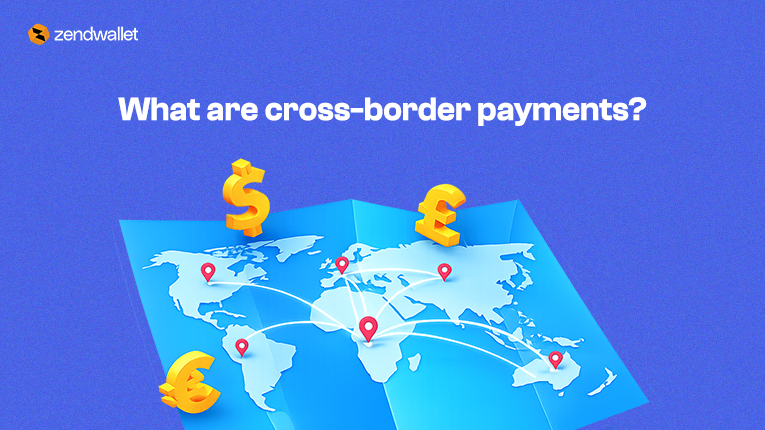
Cross-border payments are financial transactions where the sender and the receiver are located in different countries. They typically involve different currencies, multiple financial institutions, and regulatory compliance checks.
These transactions occur between:
- Businesses making B2B payments across borders
- Companies collecting revenue from international customers
- Financial institutions settling obligations globally
A customer in the UK paying a business in Ghana, or a Kenyan company paying a supplier in Germany, both are cross-border payments.
How Does Cross-Border Payment Work in Africa?
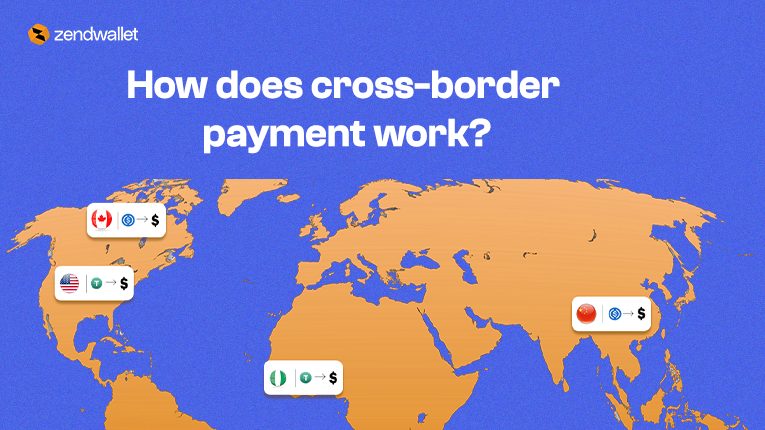
On the surface, cross-border payments look straightforward. Behind the scenes, however, several steps happen before funds arrive. Here is how the process works:
1. Payment Initiation
The sender selects a payment method: bank transfer, card, mobile wallet, or crypto, and enters the transaction details, including the amount and recipient information.
2. Currency Conversion
When different currencies are involved, the payment is converted at the prevailing exchange rate. This conversion may include exchange rate margins and transaction fees, both of which affect the final amount received.
3. Payment Routing
The funds move through one or more intermediary banks, payment processors, or card networks. The number of intermediaries involved directly impacts both the speed and the cost of the transfer.
4. Compliance and Security Checks
Every institution in the payment chain verifies the transaction. This includes anti-money laundering (AML) screening, fraud detection, and regulatory compliance. These checks are mandatory but can introduce delays if documentation is incomplete.
5. Settlement
Once all checks are passed and the transfer is processed, the receiver gets the funds in their local or chosen currency. Understanding each of these steps is essential for any business looking to optimise how it sends and receives money internationally.
Top Related: USDT TRC20 Contract Address: What It Means and How to Use It
Types of Cross-Border Payments in Africa
There is no single method for moving money across African borders. Different payment types serve different business needs:
Bank Transfers (SWIFT): The most traditional method. Reliable and widely accepted, but slower and more expensive due to multiple correspondent banks.
Card Payments: Debit and credit cards are convenient for e-commerce transactions. Processing and currency conversion fees apply.
Digital Wallets: Mobile-first payment solutions are increasingly popular across Africa. They are faster, often cheaper, and well-suited to markets with high mobile penetration.
Cryptocurrency and Stablecoins: Assets like USDT and USDC remove many intermediaries from the payment chain. Settlement is faster, and they are increasingly used for B2B cross-border payments across the continent.
Prepaid Currency Cards: Preloaded with foreign currency, these are useful for international spending but limited in flexibility.
Methods African Businesses Can Use to Accept Cross-Border Payments
Choosing the right payment method depends on your customers, your markets, and your operational needs. Here are the most relevant options for businesses today:
Bank Transfers work well for large, high-value transactions, though processing times are longer and fees are higher.
Debit and Credit Cards are widely accepted and ideal for businesses serving international customers through e-commerce, though processing fees apply.
Mobile Money has strong adoption in countries like Ghana, Kenya, Tanzania, and Uganda. It effectively serves local payment needs and is expanding into cross-border use cases.
Pay with Bank (Direct Bank Authorization) allows customers to authorise payments directly from their bank account fast, seamlessly, and card-free.
Cryptocurrency and Stablecoins offer fast, borderless payments with growing adoption across Africa, particularly for B2B transfers and international collections.
How to Start Accepting Cross-Border Payments as an African Business
Getting set up to receive international payments involves more than picking a payment provider. Here is a practical approach:
Understand your target market. Research the currencies, preferred payment methods, and regulatory requirements in the countries you are serving or selling into.
Choose the right payment provider. Look for multi-currency support, transparent fees, fast settlement times, and strong compliance frameworks that work across African jurisdictions.
Set up security and fraud protection. Enable authentication systems, monitor transactions regularly, and ensure your team understands fraud risks specific to cross-border flows.
Localise the payment experience. Display prices in local currencies, offer regionally preferred payment methods, and adapt your checkout to regional behaviours and expectations.
Build for scale. Use platforms designed to grow with your business, ensuring smooth user experiences and optimised payment flows as transaction volumes increase.
How Does Cross-Border Payment Work on ZendWallet?
A key part of understanding how cross-border payments work in Africa today is examining how modern platforms have redesigned the experience. Zend FX, developed by ZendWallet, is designed to give African businesses the speed, clarity, and complete control they need when moving money across borders.
Zend FX allows businesses to send international payments in USD, EUR, GBP, and CAD using stablecoins like USDT and USDC, removing the friction and opacity that comes with traditional correspondent banking.
How Zend FX Works Step by Step
Step 1 – Create Your Business Account Sign up on ZendWallet and complete your KYB (Know Your Business) verification to access the platform.
Step 2 – Submit Your Business Details. Upload your company documents, add directors and team members, and assign roles and permissions for efficient payment management.
Step 3 – Access Zend FX Once verified, navigate to the Zend FX section of your dashboard to begin your transaction.
Step 4 – Initiate Your Payment
- Select your send currency: USD, EUR, GBP, or CAD
- Add your beneficiary’s details: name, email, phone number, bank account, SWIFT code, and bank address
- Upload your invoice (JPEG or PNG, up to 2MB) for transaction verification
- Fund the payment using USDT or USDC from your ZendWallet
- Confirm and track your payment in real time, with access to MT103 receipts and full transaction records
Zend FX Payment Terms
| Detail | Value |
| Minimum Amount | $1,000 |
| Maximum Amount | $1,000,000 per transaction |
| Processing Time | 24–72 business hours |
How African Businesses Pay Suppliers in China
Key Challenges of Cross-Border Payments in Africa — And How to Overcome Them
High transaction costs: Fees from exchange rate margins and intermediary banks reduce the value received. Businesses using stablecoins for funding can reduce exposure to rate fluctuations before conversion.
Slow settlement times: Multiple correspondent banks in a payment chain each introduce delays. Choosing providers with direct routing and fewer intermediaries speeds things up considerably.
Complex compliance requirements: Each country has its own regulatory framework. Working with providers that have built-in compliance infrastructure removes this burden from your internal team.
Limited visibility: Not knowing where your money is during transit creates operational uncertainty. Real-time tracking tools like ZendWallet’s Track Payment feature solve this by showing the status of your transaction at every stage, including visibility across intermediary banks.
Frequently Asked Questions
How do currency exchange rates affect cross-border transactions in Africa?
Exchange rates determine how much value is received after converting between currencies. Rates fluctuate based on market conditions and often include provider markups that are not always visible upfront. Using stablecoins to fund transactions, as Zend FX allows, creates greater predictability, since value is held in a dollar-pegged asset until the point of conversion.
How can African businesses minimise risks in international payments?
Work with platforms that have robust compliance frameworks, require proper transaction documentation, and provide clear audit trails. ZendWallet‘s structured payment flow includes invoice uploads, downloadable receipts, and role-based team access to support governance and accountability across your organisation.
Can businesses track international payment status in real time?
Yes. With ZendWallet’s Track Payment feature, businesses can monitor every stage of a transaction from initiation through intermediary banks to final delivery at the beneficiary bank. This level of transparency is essential for managing cash flow and running international operations reliably.
Conclusion
Understanding how cross-border payment work in Africa is a business advantage, one that directly affects your costs, your cash flow, and your ability to compete globally. The infrastructure is improving, the options are expanding, and the gap between businesses that have figured this out and those that have not is growing.
Zend FX by ZendWallet is designed for African businesses that need to move money internationally with structure, speed, and full transparency. By combining stablecoin funding with major currency payouts and real-time tracking, it removes the friction that has historically made cross-border payments difficult on the continent and gives your business the foundation to grow beyond borders.
Top Read: https://blog.zendwallet.com/how-to-make-money-online-in-nigeria/